

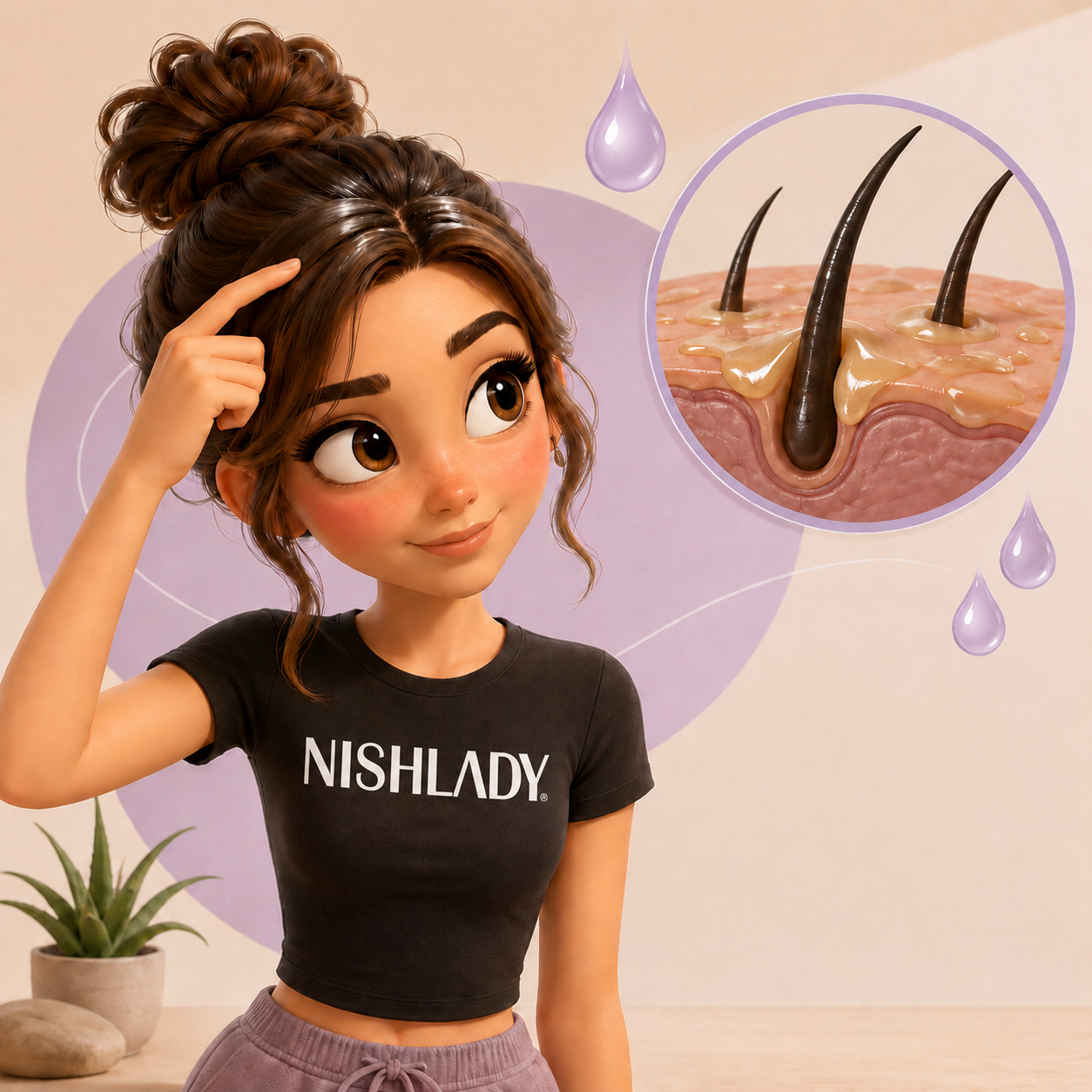
You washed your hair yesterday… so why does it already feel oily?
You washed your hair yesterday. Today? Your roots already look flat, shiny, and a little too “I’ve had a long week” — even though you literally just had a wash day. Annoying? Very. Common? Absolutely. An oily scalp can make your hair feel heavy, limp, itchy, or like it never stays fresh for long. But before you start blaming your hair, let’s talk about what’s actually happening.
Your scalp is supposed to make oil
Your scalp naturally produces oil. That oil is called sebum, and it’s not a bad thing. It helps protect your scalp and keep your hair from drying out. The problem starts when your scalp produces more oil than your hair needs, or when product, sweat, pollution, and styling residue sit on your scalp and make everything feel greasy faster. And in South Africa, let’s be honest — heat, humidity, gym sessions, school runs, load-shedding sweat, dry shampoo, styling cream, and protective styles can all add to the buildup.
So, why does your scalp get oily so quickly?
Sometimes it’s genetics. Some scalps are just naturally more oily. Sometimes it’s hormonal. Your cycle, stress, medication, pregnancy, or changes in your body can all affect how oily your scalp feels. Sometimes it’s your wash routine. If you’re not cleansing your scalp properly, oil and product residue can stay behind. Then your hair feels greasy again almost immediately.
Your products might be too heavy for your roots
This is the one people don’t always like hearing: you might be using products that are too heavy for your scalp. Rich masks, oils, creams, leave-ins and styling products can be amazing for your lengths and ends, especially if your hair is dry, curly, coloured, or textured. But they don’t always belong on your scalp.
- Your scalp and your ends do not need the same things.
- Your scalp needs to be clean and balanced.
- Your ends often need moisture, softness and protection.
That’s the difference.
What can you do about it?
- First, focus your shampoo on your scalp, not your ends. Massage gently with your fingertips and really let the cleanser do its job at the roots. Your lengths will get cleaned as the shampoo rinses through.
- Second, rinse properly. I know it sounds basic, but leftover shampoo or conditioner can make your hair feel oily much faster.
- Third, keep conditioner away from your roots unless your hairdresser has specifically told you otherwise. Apply it mainly from mid-lengths to ends.
- Fourth, be careful with oils and styling creams. They’re usually best used lightly and away from the scalp, especially if your roots get greasy quickly.
Don’t attack your scalp — balance it
Don’t panic-wash your hair every day without checking the rest of your routine. Sometimes over-washing can leave your scalp feeling stripped, and then it responds by producing more oil. The goal is not to attack your scalp. The goal is to balance it.
When your scalp needs a reset
If your scalp feels oily, heavy, or like it has a lot of buildup, a clarifying-style wash can help reset things. This is where something like Nishlady Deep Detox can fit beautifully into your routine. It’s a good option when your hair feels weighed down and your scalp needs that fresher, cleaner feeling — especially if you use styling products often. But remember: detox-style products are not something you need to overuse. Think of it as a reset, not your everyday personality.
A simple oily-scalp routine
- Use your regular shampoo for normal wash days.
- Use a detox or deep-cleansing option when your scalp feels congested, oily, or heavy.
- Condition only your mid-lengths and ends.
- Keep heavier products away from the roots.
Your scalp is not the enemy. Please don’t judge your hair by how it behaves on one bad week. Stress, weather, hormones, workouts, and even changing seasons can all affect your scalp. Your oily scalp is not a character flaw. It’s just your scalp asking for a bit more balance. Once you understand what it needs, it becomes much easier to manage.
Fresh roots, soft ends, no drama.
You’ve got this.
Love,
Ava


